The helper translation problem nobody talks about
There are 280,000 helpers in Singapore. 'Ok mam' is the most quoted phrase in employer subreddits. Here's what's actually happening — and why pretending it's fine is the most expensive thing in the household.
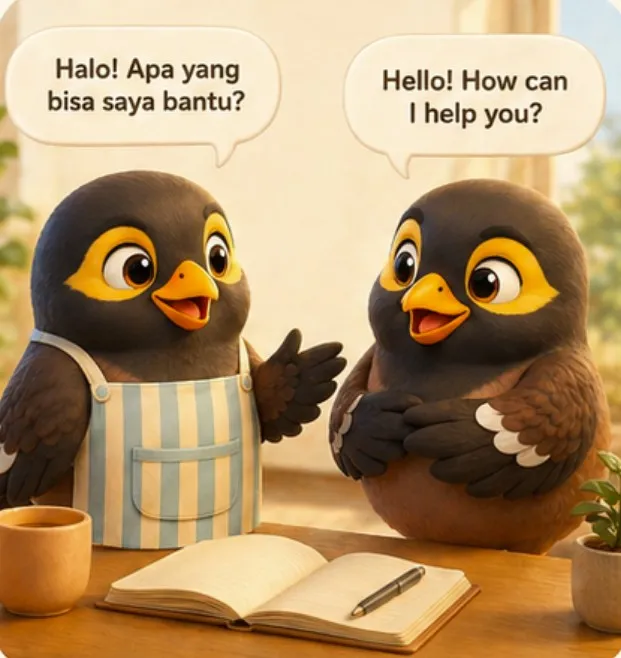
Scroll through any Singapore employer forum long enough and you’ll see the same thread, written by ten different people:
“I told her don’t mix the dark and white clothes. She said okay ma’am. Pink shirt. Again.”
“Asked her to pick up Charlie at 3.30. She nodded. Charlie was alone at the gate at 3.45.”
“I said don’t give him sugar. She said okay ma’am. Three hours later, ice cream.”
The replies are predictable. Half are “you must be firmer”. The other half are “you must be patient”. Almost nobody points out the actual thing.
The helper didn’t understand. And she said yes anyway.
Why “Ok mam” doesn’t always mean ok
Helpers in Singapore overwhelmingly come from Indonesia, the Philippines, and Myanmar. Their working English is usually solid for daily life. It is often not solid for the specific, multi-clause, context-dependent instructions a busy employer rattles off in 8 seconds while putting on her shoes.
“Pick up Charlie at 3.30 from the back gate of the school not the front, but if it’s raining go to the canopy near the principal’s office, and on the way back stop by the cleaners to collect Papa’s shirts, the receipt is on the fridge.”
You think you’ve said one thing. The helper has heard six things, three of them ambiguous. She has two choices:
- Ask you to repeat. Risk looking confused. Maybe make you late.
- Say “okay ma’am” and figure it out as she goes.
Almost everyone picks option 2. Almost everyone in option 2 gets it partly wrong.
The cost lands on the household: laundry ruined, wrong groceries, kid waiting at the wrong gate. Then the employer is annoyed, the helper feels stupid, and neither of them addresses the actual problem.
The actual problem is they don’t share enough language to pass complex multi-step instructions reliably. That’s not a personality flaw on either side. It’s an engineering gap that the household is being asked to absorb manually.
Why translation apps haven’t fixed it
There are translation apps. Helpers know about them. Employers know about them. Almost nobody uses them between each other. Because:
- They require switching apps mid-instruction. “Hold on let me copy this into Google Translate” is not how households talk.
- They lose voice. Most communication between helper and employer is verbal — voice notes, in-person, calls. Translation apps assume text. That’s the wrong end of the problem.
- They’re awkward. Pulling out a translation app implies the other person isn’t being understood. Both sides find it embarrassing. Both sides avoid it. Both sides keep nodding through misunderstandings.
The fix isn’t a translation app. The fix is making translation invisible and bidirectional, baked into the channels the household already uses.
What auto-translation in messaging actually does
Imagine the same instruction, but the household uses one chat app (let’s call it the same one our family uses) where:
- You record a voice note in English: “Don’t mix the dark clothes with the white ones in the wash, ok? Use cold water.”
- Your helper opens it on her phone. She hears it spoken back to her, in Bahasa Indonesia, in a voice that’s been deliberately coached to sound like a helpful older Singapore Aunty rather than a robotic translator. “Tolong pastikan kamu tidak mencampur baju warna gelap dengan yang putih di mesin cuci, ya? Pakai air dingin.”
- She replies in Bahasa: “Iya bu, sudah saya pisahkan.”
- You hear it in English: “Yes ma’am, I’ve separated them already.”
Nobody copy-pastes. Nobody pulls out a translation app. Neither person feels condescended to. Both sides understand. The white shirt stays white.
The dignity layer
Here’s the part most translation tools miss: how the translation sounds matters as much as what it says.
A flat machine-voice translation feels institutional, like the helper is being talked at by a bureaucrat. A warm, familiar voice — the kind of voice your mother-in-law uses, the kind of voice the helper would hear at her own family dinner — lands differently. It signals: we care enough to do this properly.
That’s the difference between a helper who feels like staff and a helper who feels like family. Which is, by the way, the household most employers actually want — they just don’t know how to build it because the language tax is in the way.
The numbers
- ~280,000 migrant domestic workers in Singapore (MOM, 2024).
- ~1 in 5 SG households employs a helper.
- The average employer-helper relationship lasts 2–4 years.
- The most-cited frustration on Reddit’s r/singapore and SG Facebook groups for FDW employers? “Communication.”
This is a structural feature of Singapore family life. It’s not going away. The right response is to build tools that meet it, not to keep pretending “ok mam” means ok.
Where Myna fits
We built auto-translation into Myna from day one. Voice notes between employer and helper get translated both directions, in voice form, in a tone that respects both sides. We let employers pick the Aunty voice that does the relaying — Bahasa-flavoured Mak Cik, Tamil-Singaporean Amma, classic kopi-shop Aunty — because it sounds different to a helper than a Google Translate robot, and because that difference shows up in the relationship.
The line that came back from one of our parent testers, after using it for two months:
“‘Ok mam’ doesn’t always mean ok. Now we actually understand each other — and nobody has to pretend.”
That’s the bar. That’s the product.
Myna is the family operating system for Singapore households. One hub, one app, every family member.
Try Myna